
- What is Direct Labor Cost?
- Difference between Direct Labor Cost and Indirect Labor Cost
Human Resource Management (HRM) covers various aspects, one of which is the calculation of direct labor costs. This cost is an important element that cannot be ignored in an effective HR strategy. For example, employee compensation estimates often rely on direct labor cost budgets.
How we verified this
We cross-referenced public data (BLS, SBA, Federal Reserve, major industry reports) against our own review of this topic. Where specific numbers appear, we link the primary source. Where sources disagree, we note the discrepancy rather than pick a single figure.
Key Takeaways
- Human Resource Management (HRM) covers various aspects, one of which is the calculation of direct labor costs.
- Managing direct labor costs effectively is critical!
- To calculate direct labor costs, use a simple formula.
Therefore, understanding how to calculate this cost is crucial.
What is Direct Labor Cost?
Direct labor cost is an expense that cannot be ignored in Human Resources (HR) management and corporate finance. It includes all expenses directly related to employees’ work in the company.
Elements in direct labor costs include various things related to employee compensation and welfare ranging from salaries, benefits, to insurance. All of these elements are important parts of calculating direct labor costs and you must pay serious attention to them.
Keep in mind that direct labor costs play a big role in determining the selling price of the products or services you offer. Smart management of direct labor costs can affect a company’s ability to compete in the market and ensure its business runs smoothly. In addition, good management of these costs can improve the company’s financial statements, and its profits will also increase.
Difference between Direct Labor Cost and Indirect Labor Cost
In addition to direct labor costs, you must have also encountered the term indirect labor costs in employee management. What distinguishes the two costs?
Direct labor costs are tied to the work of employees directly involved in creating a product or service. For example, the salary of employees who make goods or provide services, these costs fall into the category of direct labor costs and can be directly linked to the product or service produced.
Then, this cost is also key in calculating the selling price of a product or service. Therefore, companies must calculate direct labor costs in determining prices, because it is a major component in the production process or service provision.
Then, what are indirect labor costs? These costs are not directly related to the production of the product or service offered. Examples include costs such as office supplies, electricity, administrative costs, or employee training.
Indirect costs also impact production or services although they are still important for the company’s operations.
The difference between direct and indirect labor costs lies in their relationship to production or service. Indirect labor costs, on the other hand, are more removed from the direct production activities. They are not as closely linked to the process.
Direct Labor Cost Example
Some examples of direct labor costs that need to be included in the calculation are:
1. Salary
Salaries are the major cost in direct labor costs. The scope of this cost includes salaries and wages of employees who participate in the production of goods or the provision of services. For example, machine operator salaries, technician salaries, and production worker salaries.
2. Employee Benefits
Apart from salary, the company offers benefits to its employees. These benefits include meal allowances, transportation allowances, and more. When calculating direct labor costs, only include the benefits of employees directly involved in production.
3. Employee Insurance Costs
It is not uncommon for companies to separate employee benefits from insurance in calculating their costs. Insurance costs are incurred by companies to maintain the health and safety of their workers. These costs include life health insurance premiums and administrative costs paid.
Similar to the other two examples of direct labor costs, you only need to calculate the insurance costs of employees who are directly involved in the production process.
How to Calculate Direct Labor Costs
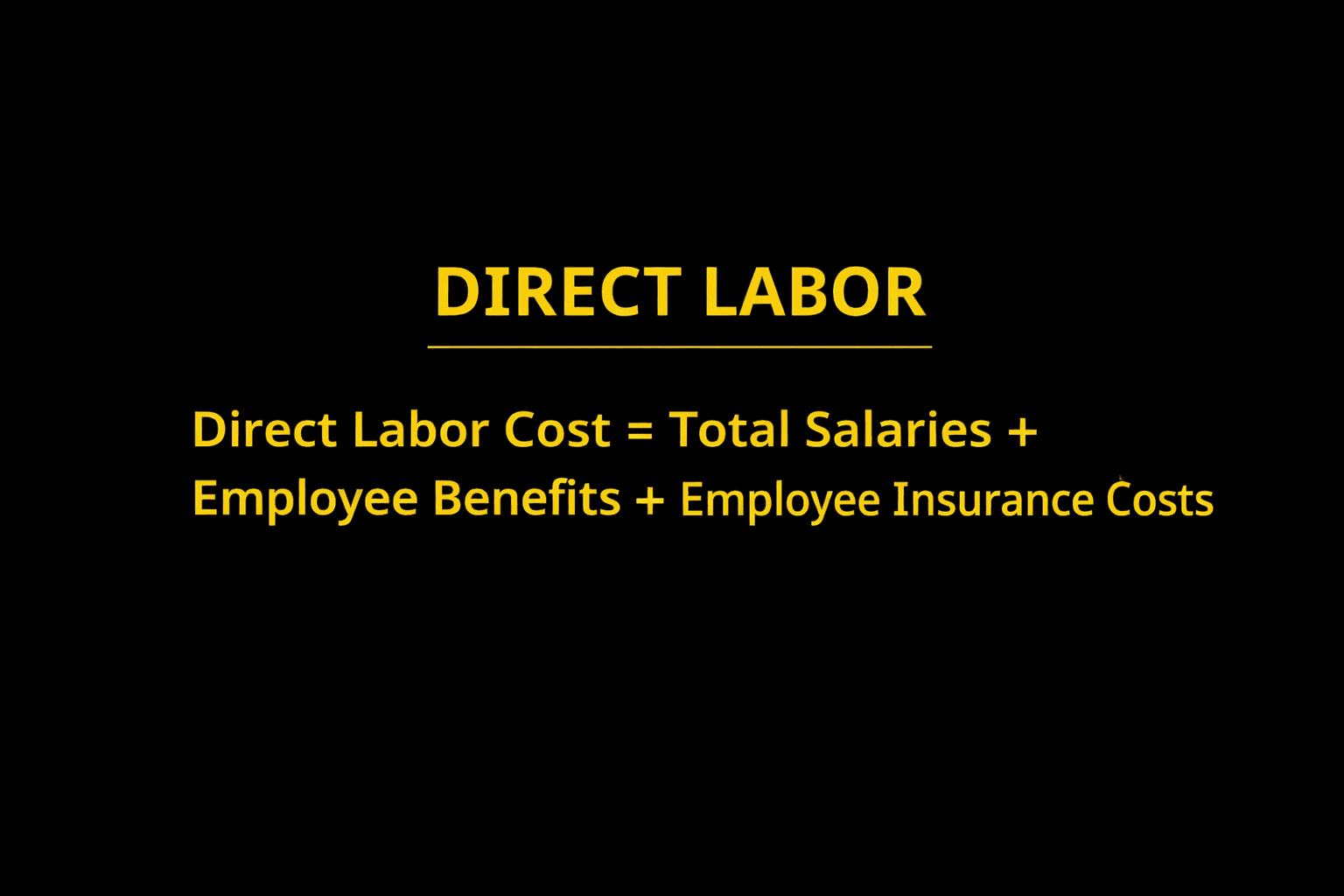
To calculate direct labor costs, use a simple formula. Add salaries and wages together. Include employee benefits and insurance costs.
The total sum will give you the direct labor costs for all production-related employees.
Formula:
Direct Labor Cost = Total Salaries + Employee Benefits + Employee Insurance Costs
For example, if the total salary of all production employees in your company is $100,000,000, benefits are $20,000,000, and employee insurance costs are $10,000,000, then the total direct labor cost is $130,000,000.
Why Manage Direct Labor Costs Effectively?
Managing direct labor costs effectively is critical! There are several compelling reasons why direct labor costs are a focus for companies:
1. Impact on Financial Reports
Direct labor costs are one of the largest components of a company’s operating costs. When these costs are managed carefully, a company’s net income can increase significantly. This leads to brighter and more profitable financial statements.
2. Increased Productivity
Fair pay and adequate benefits are powerful sources of motivation. When employees feel that their efforts and dedication are rewarded with appropriate compensation, they tend to work harder and smarter. Employees who work with passion and enthusiasm have a higher potential to achieve company targets.
In addition, the quality of products or services produced also increases so that the company can maintain and increase its market share and competitiveness.
3. Employee Satisfaction
Employee satisfaction is linked to effective management of direct labor costs. Fair and respectful treatment makes employees feel valued. They perceive that the company cares about their well-being and needs.
This encourages a positive working relationship and a harmonious work environment. As a result, employee loyalty increases, and turnover rates decrease. Consequently, recruitment and training costs are reduced.
Additionally, experienced employees enhance the quality of work.
4. Competitiveness in the Market
Efficiently managed direct labor costs provide a competitive advantage in the marketplace. With lower production costs, companies can offer products or services at more competitive prices and become a major attraction for consumers. Companies that have controlled direct labor costs also have the flexibility to invest in innovation, product development, or better customer service.
Companies can also win the competition in a competitive market and gain a larger market share.
How to Manage Direct Labor Costs Effectively
To manage direct labor costs effectively, there are several steps you can take, namely.
1. Monitor Direct Labor Costs Regularly
One of the key elements in managing direct labor costs is to continuously monitor and audit them regularly. This is very important to identify unexpected changes or increases. With regular monitoring, you can respond more quickly to changes in direct labor costs, thus avoiding sudden and potentially costly increases.
2. Calculate Costs Accurately
Mistakes in calculations can disrupt the company’s planning and budget. Therefore, make sure that all cost calculations, such as salaries, benefits, and insurance, are done accurately. If these calculations are not correct, it can cause an imbalance in budget allocation, which can ultimately hinder the company’s efficiency.
3. Determine the Direct Labor Cost Budget
Budgeting helps companies to better organize and control expenses. With a budget, companies have a clear guideline on how much they can spend on direct labor costs. This helps in making better financial decisions and preventing budget misuse.
4. Using Outsourcing to Reduce Direct Labor Costs
An effective strategy to reduce direct labor costs is to consider outsourcing. Some tasks or functions that are not directly related to the company’s core business can be taken over by a third party who is an expert in the field.
For example, administration, customer service, or equipment maintenance. In this way, you can reduce the burden of direct labor costs, because you only pay for outsourcing services according to your needs. Moreover, the company can focus on its core business, while the outsourcer manages additional tasks.
In human resource management, managing direct labor costs is one of the key elements to achieving success. By understanding and managing these costs well, companies can increase profitability, productivity, and employee satisfaction.
What does direct labor mean?
This is the labor consumed in areas directly related to production or the provision of a service. It is generated by the company’s skilled workers.
What are the advantages of using direct labor?
Using direct labor hours as a cost factor can boost efficiency and productivity. Project managers and staff understand that their hours impact the project’s profitability and performance.
What is indirect labor?
All workers in an establishment who do not participate directly in the production or provision of a service and whose output cannot be calculated or assessed based on the quantity of units produced or services provided.
Related resources: See also our guide on indirect labor cost and learn how Billed's time tracking helps you calculate labor costs.
When this guide isn't for you
This is written for owner-operators and small teams doing their own books or working with a bookkeeper. If you run a regulated industry with complex consolidation (multi-entity real estate, SaaS with deferred revenue at scale, medical billing with specific payer rules), you probably need a specialist accountant and an ERP rather than a general small-business approach.
Frequently Asked Questions
What is the difference between direct labor cost and indirect labor cost?
Direct labor cost refers to wages paid to workers who are directly involved in producing goods or delivering services, while indirect labor cost covers employees who support operations but do not work on the product itself. Examples of indirect labor include supervisors, maintenance staff, and quality control inspectors.
How do you calculate direct labor cost per unit?
To calculate direct labor cost per unit, divide the total direct labor cost by the number of units produced during that period. This metric helps businesses understand how much labor expense goes into each product and is essential for accurate pricing.
Why is tracking direct labor cost important for small businesses?
Tracking direct labor cost helps small businesses set competitive prices, identify inefficiencies in production, and manage their budgets more effectively. It also provides critical data for calculating the total cost of goods sold and determining profit margins.