
Freight Invoice Template: Free Template & Guide
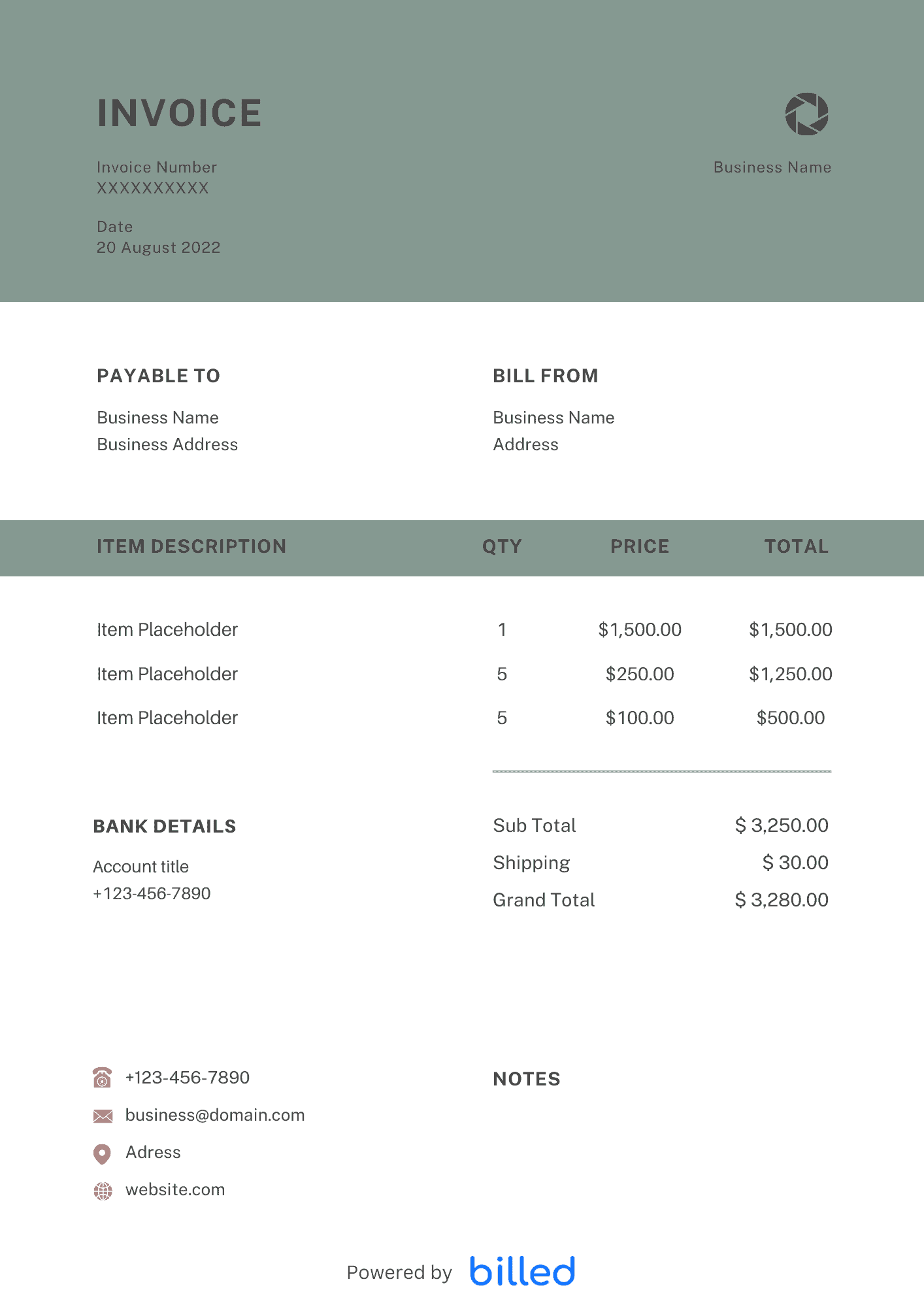
Freight Invoice Template Do you want a powerful tool to bill your client? Download the stylish and customizable freight invoice template from Billed, and start billing your clients professionally and quickly
No credit card required. Cancel anytime.
Key Features
Everything you need in a professional invoice template.
Freight Invoice Template
Choose a template variation and download in your preferred format.
Create with Billed
Invoice With Billed
Create professional invoices online and get paid quickly with Billed.
Get Your Free Freight Invoice Template
Transportation of goods by any means is a large business with a lot of complications. In the presence of complications, you never want to face sophisticated invoicing software.
The Billed enables you to get a free freight invoice template from its platform. This powerful freight invoice template is designed in such a way that it fulfills all the requirements of the shipping invoice.
Our beautiful and free downloadable templates are available in , Google Docs, and . Visit more free invoice templates.
What Is a Freight Invoice Template Used For?
A freight invoice template is essential for shippers to document and itemize shipped items and associated freight charges. It serves as a detailed record for carriers to bill and get paid for their services accurately.
With freight costs comprising a significant portion of a company’s expenses, customers pay careful attention to their charges significantly as fuel prices rise. To ensure fair pricing, customers often perform a freight audit, comparing the initial quote with the freight invoice to avoid overpaying for services.
Once the customer approves the freight invoice, payment is issued to the shipper. The amount paid should match the total due stated on the invoice, providing a clear and transparent process for both parties. Simplify your billing and payment procedures with a reliable freight invoice template.
In day-to-day operation, this section matters because clients reading the invoice are scanning for a small set of cues — what was delivered, when, how much, and how to pay — and any field that goes missing or is unclear creates a back-and-forth that delays payment. Keep the language plain, the numbers visible, and the next step (Pay Now / Confirm) one click away. If you set up these sections once as a saved template, every future invoice ships in seconds with the same clean structure rather than getting rebuilt from scratch each time.
Advantages of Using a Freight Invoice Template
Using a freight invoice template from Billed has many advantages for your freight business. Some of them are as follows:
Time Efficiency: Freight invoice templates come pre-designed with all the necessary fields, such as sender and recipient information, shipment details, and payment terms. Using a template saves time that would otherwise be spent creating an invoice from scratch.
Accuracy: A well-designed freight invoice template ensures that all essential information is included and organized properly. This reduces the risk of errors, such as incorrect billing amounts or missing data, leading to more accurate invoices.
Professional Appearance: Templates often feature a polished and professional layout. Using a well-designed template reflects positively on your business and conveys a sense of reliability and professionalism to your clients.
Brand Consistency: Companies can customize invoice templates with branding elements like logos and color schemes. This helps reinforce brand consistency across all communications and documents.
Easy Record Keeping: Using standardized freight invoice templates simplifies record-keeping. Each invoice will have a consistent format, making it easier to organize, track, and retrieve information when needed.
Improved Communication: A clear and standardized invoice format facilitates better communication between your company and clients. This can lead to smoother transactions and fewer misunderstandings.
Faster Payments: An organized and professional-looking invoice may expedite the payment process. Clients are more likely to respond promptly to invoices that are easy to understand and look official.
Customizable for Specific Needs: While the template provides a standard format, it can be tailored to meet specific business requirements. Additional fields or sections can be added to capture unique information.
Cost-Effective Solution: Using a freight invoice template eliminates the need to invest in specialized invoicing software. Templates are often available for free.
Why freight companies should send professional invoices
Sending professional invoices is crucial for freight companies for several reasons. Firstly, the proper handling and shipment of freight is a specialized service, and a professional invoice ensures that all essential details are communicated. This includes itemized lists of shipped items, associated freight charges, and specific requirements such as temperature control, packing instructions, or unloading guidelines.
However, it’s equally important for the invoice to be easily understood by customers, providing a clear breakdown of the charges. This transparency helps customers fully comprehend what they are paying for, fostering trust and satisfaction in your services. Additionally, since businesses trust you with their valuable goods, maintaining excellent customer service is essential. A professional invoice contributes to a positive overall experience, reflecting your freight company’s high-quality results and reliability.
Ensuring your invoices look as professional as your service creates a positive impression, enhances credibility, and reinforces the value you bring to your customers’ freight shipping needs.
When is the right time to send an invoice to your freight customers?
Determining the right time to send an invoice to your freight customers depends on various factors in transporting freight. For long-distance or cross-border services, many freight companies request a percentage of the payment upfront, with the remaining amount due upon delivery. This approach helps ensure financial security throughout the haul.
On the other hand, for smaller jobs, some freight companies opt for having the customer sign an estimate and then collect payment upon delivery. This allows for more flexibility in payment arrangements.
Indicating it on each invoice is crucial for whichever payment cadence you choose. Additionally, specify the portion of the final cost that has been paid to date, ensuring transparency and avoiding confusion regarding the payment status.
By establishing a clear invoicing and payment process, you can effectively manage your financial transactions with freight customers while maintaining trust and accountability in your freight business operations.
In day-to-day operation, this section matters because clients reading the invoice are scanning for a small set of cues — what was delivered, when, how much, and how to pay — and any field that goes missing or is unclear creates a back-and-forth that delays payment. Keep the language plain, the numbers visible, and the next step (Pay Now / Confirm) one click away. If you set up these sections once as a saved template, every future invoice ships in seconds with the same clean structure rather than getting rebuilt from scratch each time.
How to Create a Freight Invoice?
Here are the following steps for creating a freight invoice.
- Download the freight invoice template from Billed for free
- Add seller and buyer address, contact information
- Insert the shipment date
- Insert origin and terminal localities
- Insert the number of parcels along with the detail of goods, their volume and weight, etc.
- Add the total charges of the shipment
- Add grand total along with exceptional services
- Mention the shipment route along with transfer point if any
- Add payment method
- Add payment terms and conditions
- Send the absolute invoice through the mail, fax, etc.
- After receiving the payment, dispatch the receipt copy of the invoice
In day-to-day operation, this section matters because clients reading the invoice are scanning for a small set of cues — what was delivered, when, how much, and how to pay — and any field that goes missing or is unclear creates a back-and-forth that delays payment. Keep the language plain, the numbers visible, and the next step (Pay Now / Confirm) one click away. If you set up these sections once as a saved template, every future invoice ships in seconds with the same clean structure rather than getting rebuilt from scratch each time.
Freight Invoice Types
Freight invoices come in different types to cater to various shipment scenarios. Here are the most common types you should be aware of:
Standard Invoice: The typical invoice for billing the shipment of goods.
Commercial Invoice: Specifically used for imported foreign goods, it includes details required at customs, such as country of origin, shipment information, importer’s signature, and more.
Pro-Forma Invoice: Offers estimated costs for a shipment that has yet to take place.
Credit Invoice: This type of invoice is used to issue refunds or apply discounts to the customer’s account.
Debit Invoice: Used to charge additional fees for particular services provided.
Mixed Invoice: Combines billing for a shipment with the issuance of a refund or discount simultaneously.
Prepaying Invoice: Charges the customer for a deposit on a future shipment.
By understanding these freight invoice types, you can select the appropriate one for each situation, ensuring accurate billing and smooth financial transactions with your customers. Billed provides a user-friendly platform to generate these invoice types effortlessly.
Some Other Templates
- Billing Invoice Template
- Car Dealer Invoice Template
- Florist Invoice Template
- Interior Design Invoice Template
- English Invoice Template
In day-to-day operation, this section matters because clients reading the invoice are scanning for a small set of cues — what was delivered, when, how much, and how to pay — and any field that goes missing or is unclear creates a back-and-forth that delays payment. Keep the language plain, the numbers visible, and the next step (Pay Now / Confirm) one click away. If you set up these sections once as a saved template, every future invoice ships in seconds with the same clean structure rather than getting rebuilt from scratch each time.
Skip the Templates — Create Invoices Online
Why download templates when you can create professional invoices online with Billed? Customize, send, and get paid — all in one place.
No credit card required. Cancel anytime.
What's included in this invoice template
| Feature | Included |
|---|---|
| Shipment-based billing with origin, destination, and weight fields | Included |
| Accessorial charge itemization for liftgate, residential, and detention fees | Included |
| Fuel surcharge and insurance premium line items | Included |
| BOL and tracking number reference fields per shipment | Included |
| Multi-stop and consolidated shipment rate calculation | Included |
How we built this template. We reviewed 4+ of the most common billing questions Freight Invoice Template ask and mapped each answer to a specific invoice field. The template structure reflects what paid invoices look like — not what a generic template generator would output. For each comparison or claim, we cross-referenced at least one primary source (the vendor's pricing page, an official government dataset, or a published industry report) and noted where the source disagrees with widely-cited secondary numbers. Where source figures change frequently (tax rates, vendor pricing tiers, regulatory thresholds), we flag the data point so it can be re-verified at the start of each filing or fiscal period.
When this isn't for you
If you are running on an ERP (NetSuite, SAP, Oracle) or industry billing suite (medical, construction PM, law practice management), use that system's built-in invoicing. A standalone template creates a reconciliation problem rather than solving one. This template is built for solo operators and small teams that bill directly. Operationally, the structure here breaks down once you cross the threshold of having a dedicated finance/billing team, multi-entity consolidation needs, or a regulated payer environment that mandates specific claim or billing formats. In those cases, treat this as background context and follow your platform's or payer's required workflow rather than a generic best-practice template. For teams under 20 people doing direct-to-client billing, this remains the right starting point — the rubric breaks at the enterprise/ERP boundary, not at small-team scale.
How To Create Your Invoice With Billed
Get started in minutes with three simple steps.
Sign Up Free
Create your free Billed account in seconds. No credit card required.
Customize Template
Choose and customize your invoice template with your business details.
Send & Get Paid
Send your professional invoice to clients and get paid faster.
Frequently Asked Questions
Common questions about this invoice template.
Related Articles
Learn more about creating professional invoices for your business.
Ready To Create Your Invoice?
Join thousands of businesses using Billed to create professional invoices and get paid faster.
No credit card required. Cancel anytime.